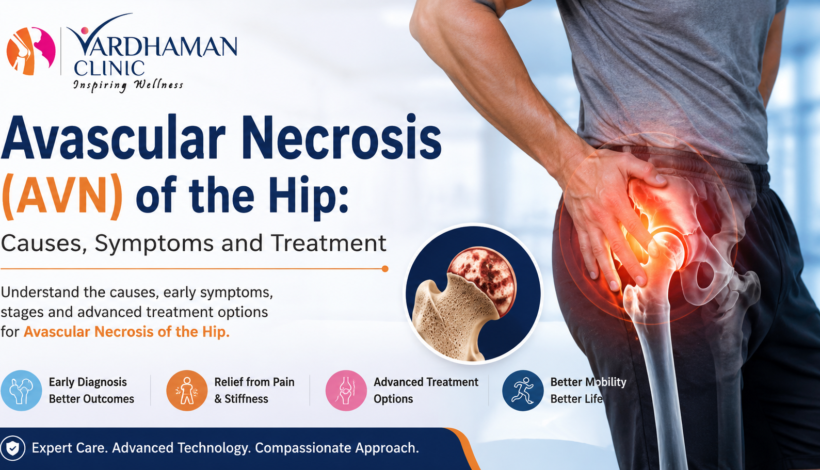
Avascular necrosis (AVN) of the hip showing hip pain, bone damage, causes, symptoms, diagnosis, stages, and treatment options including hip replacement surgery.

Avascular Necrosis (AVN) of the Hip: Causes, Symptoms and Treatment

If you are a young, otherwise healthy adult dealing with hip pain that will not go away, and your doctor has mentioned avascular necrosis instead of the more familiar term “arthritis,” you are probably confused and a little worried. That confusion is completely normal. Most people have heard of arthritis, but very few have heard of avascular necrosis of the hip, also called AVN, osteonecrosis, or hip bone death.

In simple words, avascular necrosis happens when the blood supply to the top of the thigh bone (called the femoral head) gets cut off or reduced. This is one of the main hip bone death causes that doctors look for when a younger patient reports ongoing hip pain. Bone is living tissue, and just like any other part of the body, it needs a constant supply of blood to stay healthy. When that supply is disrupted, bone cells start to die. Over time, this weakens the bone structure, and if it is not caught early, the femoral head can collapse, leading to severe AVN hip pain, stiffness, and eventually the need for hip replacement for AVN.

This blog will help you understand the AVN hip causes, the early avascular necrosis symptoms to watch for, how doctors confirm an avascular necrosis diagnosis using X-rays and avascular necrosis MRI scans, the different AVN stages, and whether avascular necrosis without surgery is a realistic option. We will also cover the best avascular necrosis hip treatment choices at every stage, including hip osteonecrosis treatment, avascular necrosis recovery, avascular necrosis stage 3 treatment, when AVN hip replacement becomes necessary, and simple avascular necrosis prevention tips. Along the way, you will also learn why avascular necrosis in young adults is more common than most people realise, and how AVN due to steroids develops. If you are searching for the best hip specialist in Nerul or a trusted orthopedic surgeon in Navi Mumbai, this guide also explains how Dr. Abhay Chhallani, an experienced specialist treating patients across Nerul, Panvel and Navi Mumbai, approaches diagnosis and treatment for this condition.

What Is Avascular Necrosis of the Hip?

Avascular necrosis (AVN) literally means “bone death due to lack of blood.” The hip joint is a ball-and-socket joint, where the ball is the rounded top of the femur, known as the femoral head. This area gets its blood supply through a fairly delicate network of small blood vessels. Because the hip bears the full weight of the body, it is one of the most common sites affected by AVN, though the condition can also occur in the knee, shoulder, and ankle.

When blood flow to the femoral head is interrupted, even for a short period, the bone tissue in that area starts to weaken and die. Since bone does not repair itself quickly like skin or muscle, the damage builds up silently. Many patients do not feel much pain in the early stages, which is exactly why AVN often gets diagnosed later than it should.

Unlike osteoarthritis, which usually develops gradually due to wear and tear over decades, avascular necrosis in young adults can appear suddenly, often between the ages of 25 and 50. This is one of the biggest reasons patients feel caught off guard by the diagnosis.

What Causes AVN? Understanding the Risk Factors

Understanding the AVN hip causes is important because many of them are preventable or manageable. Here are the main risk factors doctors look for:

1. Long-Term or High-Dose Steroid Use

AVN due to steroids is one of the most well recognised causes. Corticosteroids, when taken in high doses or for a long duration (for conditions like asthma, autoimmune diseases, or after organ transplants), can increase fat levels in the blood. These fat particles can block the tiny vessels feeding the femoral head, cutting off circulation.

2. Excessive Alcohol Consumption

Regular heavy drinking over several years can also lead to fatty deposits building up in the blood vessels, restricting blood flow to the bone in a similar way to steroids. This is one of the most common causes seen in adults presenting with unexplained hip pain.

3. Trauma or Injury

A hip fracture, dislocation, or any significant trauma can directly damage the blood vessels supplying the femoral head. Even if the fracture heals well, the blood supply disruption can silently progress into AVN months or years later.

4. Medical Conditions

Certain diseases are linked to a higher risk of hip bone death, including:

  • Sickle cell disease
  • Lupus and other autoimmune disorders
  • Gaucher’s disease
  • HIV infection
  • Chronic kidney disease
  • Blood clotting disorders

5. Other Contributing Factors

Smoking, poor diet, radiation therapy, decompression sickness (common in deep-sea divers), and certain long-term medications can also reduce blood flow to bone and add to the risk.

6. Idiopathic AVN

In a fair number of cases, doctors are unable to pinpoint an exact cause. This is called idiopathic avascular necrosis, and it can occur even in people with no obvious risk factors.

Early Warning Symptoms of AVN

One of the trickiest parts of this condition is that avascular necrosis symptoms are often mild or completely absent in the beginning. As the disease advances, patients typically notice:

  • A dull, deep ache in the groin, thigh, or buttock, especially on weight-bearing
  • Pain that initially comes and goes, but slowly becomes constant
  • Increased pain while climbing stairs, standing for long periods, or getting up from a chair
  • Stiffness and reduced range of motion in the hip
  • A limp while walking, as the body tries to protect the joint
  • In advanced stages, pain even while resting or lying down

Because these symptoms overlap with common conditions like muscle strain or early arthritis, many patients delay seeing a specialist. If hip pain lasts more than two to three weeks, especially if you fall into a higher risk group, it is worth getting it evaluated rather than waiting it out.

Stages of AVN: How the Condition Progresses

Doctors classify AVN stages to decide the right treatment plan and to track how the disease is progressing. The most commonly used system (ARCO classification) breaks it down as follows:

StageWhat HappensTypical Symptoms
Stage 0-1Blood supply is reduced, but bone shape is normal. Often only visible on MRILittle to no pain
Stage 2Early bone changes visible on X-ray, femoral head still roundMild, occasional pain
Stage 3Small cracks or collapse begin at the surface of the femoral headNoticeable pain during activity
Stage 4Femoral head has collapsed and joint surface is damaged, arthritis sets inConstant pain, stiffness, limited movement

Catching AVN in stage 0, 1, or early stage 2 gives patients the best chance of preserving their own hip joint without needing a replacement. This is exactly why early diagnosis matters so much.

How Is Avascular Necrosis Diagnosed?

If AVN is suspected, the diagnostic process usually includes:

Physical examination, where the doctor checks range of motion, pain triggers, and gait.

X-rays, which are useful for detecting changes in later stages but often appear normal in early AVN.

Avascular necrosis MRI scans, which are the gold standard for early detection. An MRI can pick up changes in bone marrow and blood flow long before they show up on an X-ray, which is why MRI is recommended whenever AVN is suspected in its early stages.

CT scans, occasionally used to get a more detailed view of bone structure before surgery.

Blood tests, to check for underlying conditions like clotting disorders or autoimmune diseases that may be contributing to the problem.

An accurate avascular necrosis diagnosis at the right stage is what allows a specialist to recommend the most effective, least invasive treatment possible.

Can Avascular Necrosis Be Treated Without Surgery?

This is one of the most searched questions among patients, and the honest answer is: it depends on the stage.

Avascular necrosis without surgery is a realistic option only in the very early stages, before the femoral head has started to collapse. Non-surgical management usually includes:

  • Activity modification: Reducing high-impact activities and weight-bearing stress on the hip to slow down damage
  • Medications: NSAIDs for pain and inflammation, cholesterol-lowering drugs to reduce fat blockages, and blood thinners if clotting is the underlying cause
  • Physical therapy: Targeted exercises to maintain joint mobility and strengthen the muscles supporting the hip
  • Use of walking aids: Crutches or a cane to offload weight from the affected hip
  • Core decompression: A minimally invasive procedure where small holes are drilled into the femoral head to relieve pressure, stimulate new blood vessel growth, and slow disease progression. This is often combined with bone grafting or stem cell therapy for better outcomes in early stages
  • Bisphosphonates: Medications that may help slow bone loss in select cases

It is important to set realistic expectations here. These treatments can slow progression and manage pain in early stages, but once the femoral head has collapsed, non-surgical treatment alone generally cannot reverse the damage. Patients who ignore early symptoms often end up needing surgery sooner than those who seek treatment early.

When Does AVN Require Hip Replacement Surgery?

Once avascular necrosis reaches stage 3 or stage 4, with visible collapse of the femoral head or arthritis in the joint, hip preservation techniques usually stop being effective. At this point, AVN hip replacement becomes the most reliable way to relieve pain and restore function.

Total Hip Replacement

The damaged femoral head and socket are replaced with artificial implants made of metal, ceramic, or high-grade plastic. This is the most common and effective solution for avascular necrosis stage 3 treatment and beyond, offering long-term pain relief and near-normal mobility for most patients.

Osteotomy

In select cases, where only a small portion of the femoral head is affected, doctors may reshape the bone to shift weight-bearing away from the damaged area. This is less common and is generally reserved for younger patients with limited disease.

Recovery After Surgery

Avascular necrosis recovery after hip replacement typically involves a hospital stay of a few days, followed by physiotherapy to rebuild strength and mobility. Most patients are walking with support within a few days of surgery and can resume most daily activities within six to twelve weeks, depending on their overall health and how closely they follow their rehabilitation plan.

AVN Surgery Cost in India

One of the advantages patients in India have is access to high-quality hip osteonecrosis treatment, including joint replacement surgery, at a fraction of the cost compared to Western countries. The exact AVN surgery cost in India depends on factors like the type of implant used, the hospital, the surgeon’s experience, and whether one or both hips need treatment. It is best to discuss a personalised cost estimate directly with your surgeon after a proper evaluation, since every case is different.

Can AVN Be Prevented?

While not every case of AVN can be avoided, especially the idiopathic ones, several avascular necrosis prevention steps can meaningfully lower your risk:

  • Limit alcohol intake, or avoid heavy regular drinking
  • Use corticosteroids only under medical supervision, and only for as long as necessary
  • Avoid smoking, which reduces blood circulation throughout the body
  • Manage cholesterol and blood sugar levels
  • Get prompt treatment for hip injuries or fractures
  • If you have a condition like sickle cell disease or lupus, stay on top of regular check-ups so early bone changes can be caught before symptoms appear

AVN vs Osteoarthritis: Why the Diagnosis Confuses Patients

A lot of patients get confused when they are told they have AVN rather than arthritis, especially since both conditions cause hip pain and stiffness. The key difference is the cause. Osteoarthritis develops from long-term wear and tear on the cartilage, usually in older adults. AVN, on the other hand, is caused by a disruption in blood supply and can strike much younger patients, sometimes within weeks or months rather than years. Advanced AVN can eventually lead to arthritis in the joint, but the starting point of the disease is completely different, which is why the treatment approach and monitoring also differ.

When Should You See a Specialist?

You should not wait for hip pain to become unbearable before seeking help. Consult an orthopedic specialist if you notice:

  • Hip, groin, or thigh pain lasting more than two to three weeks
  • A history of steroid use, heavy alcohol consumption, or hip trauma along with new hip pain
  • Pain that worsens with weight-bearing activity
  • Stiffness that limits your normal daily movement

Early evaluation, ideally with an MRI, gives you the best chance of avoiding or delaying surgery.

Expert AVN Treatment in Nerul, Panvel and Navi Mumbai

Dr. Abhay Chhallani is an experienced orthopedic surgeon in Navi Mumbai, known for accurate diagnosis and effective, patient-focused avascular necrosis hip treatment. With a strong background in joint preservation techniques as well as advanced hip replacement for AVN, Dr. Chhallani helps patients across Nerul, Panvel and Navi Mumbai understand their condition clearly and choose the treatment path that best suits their stage of disease, lifestyle, and long-term goals.

Whether you are looking for a second opinion after an avascular necrosis diagnosis, need a detailed evaluation of unexplained AVN hip pain, or are exploring your options between non-surgical management and surgery, Dr. Chhallani’s clinic offers thorough assessment using clinical examination and imaging, along with clear guidance at every step.

If hip pain has been troubling you and you want an accurate diagnosis instead of guesswork, book a consultation with Dr. Abhay Chhallani, widely regarded as the best hip specialist in Nerul and a trusted name in hip osteonecrosis treatment across Navi Mumbai and Panvel.

Frequently Asked Questions

1. Is avascular necrosis of the hip curable?
Early stage AVN can often be managed effectively with non-surgical treatment, slowing or even halting progression. Once the femoral head collapses, hip replacement surgery is usually needed to restore function and eliminate pain.

2. Can young people get AVN?
Yes. Unlike osteoarthritis, avascular necrosis in young adults is fairly common, particularly among those with a history of steroid use, heavy alcohol consumption, or hip injury.

3. How is AVN different from a simple hip strain? |
A muscle strain typically improves within a week or two with rest. AVN pain tends to persist, gradually worsen, and is often linked to an underlying risk factor like steroid use or trauma.

4. Does AVN affect both hips?
It can. In many patients, especially those with steroid-related or alcohol-related AVN, both hips are affected, though not always at the same stage.

5. What is the best imaging test for detecting AVN early?
An MRI is the most sensitive test for catching avascular necrosis before it shows up on a regular X-ray, making it the preferred choice for early diagnosis.

Knee pain while climbing stairs causes, symptoms, treatment options, and when to see a doctor

Knee Pain While Climbing Stairs: Causes, Treatment & When to See a Doctor

That familiar twinge on the third or fourth step. The sharp pinch when you push off the landing. The dull ache that follows you all the way to the top floor. If knee pain while climbing stairs has become a regular part of your day, you are not alone, and more importantly, you should not ignore it.

Knee pain on stairs is one of the most commonly reported orthopedic complaints, yet one of the most frequently brushed aside. People assume it is age, or weather, or just the price of being busy. But pain in knee when climbing stairs is often the first clear signal that something is happening inside the joint that deserves attention. Conditions like osteoarthritis knee disease, knee cartilage damage, patellofemoral pain syndrome, and meniscus tear symptoms may feel manageable on flat ground but become noticeably worse the moment you hit a staircase.

Why do my knees hurt when I climb stairs? The answer lies in physics. Climbing stairs forces the knee to bend more deeply and absorb significantly more load than walking on flat ground. The force across the kneecap during stair climbing can be three to four times your body weight. Any underlying damage or inflammation in the joint gets amplified under that load, which is exactly why do my knees hurt when I climb stairs even when the rest of the day feels manageable.

In this blog, Dr. Abhay Chhallani explains the most common causes of knee joint pain on stairs, what your symptoms may be telling you, available knee pain treatment options, and the signs that mean it is time to see an orthopedic doctor for knee pain without further delay.

Why Stairs Are Hard on the Knee Joint

Before getting into causes, it helps to understand what the knee is actually doing when you climb stairs.

With each step up, the quadriceps muscle contracts powerfully to lift your entire body weight against gravity. This pulls on the patella, pressing it firmly into the groove at the base of the femur. The cartilage behind the kneecap, the menisci between the thigh and shin bones, and the surrounding ligaments all absorb and redistribute that force simultaneously.

On level ground, that system works smoothly even when mildly irritated. On stairs, the increased bend angle and the added load expose whatever weakness or damage exists in the joint. This is why knee pain while walking upstairs often appears before pain shows up during walking, and why stairs are such a reliable early indicator of joint problems.

Common Causes of Knee Pain While Climbing Stairs

1. Patellofemoral Pain Syndrome

Patellofemoral pain syndrome is the single most common cause of knee pain on stairs, particularly in younger and middle-aged patients.

It occurs when the kneecap does not track properly in its groove on the thigh bone. Instead of gliding smoothly, it shifts slightly to one side, creating uneven pressure and irritation on the cartilage beneath it. The result is knee joint pain centred around or behind the kneecap, which gets significantly worse during stair climbing, squatting, or prolonged sitting.

Patients often describe a dull ache at the front of the knee that builds with activity. Some notice a grinding sensation or a soft click during movement. The pain tends to ease with rest but returns quickly on the next flight of stairs.

Patellofemoral pain syndrome responds well to physiotherapy, especially exercises that strengthen the quadriceps and hip abductors to improve kneecap tracking. Most patients see meaningful improvement within six to eight weeks of consistent rehabilitation.

2. Osteoarthritis of the Knee

Osteoarthritis knee disease is the most common cause of knee pain while climbing stairs in patients over 45.

In osteoarthritis, the cartilage that lines the joint surfaces gradually wears away. As it thins, the cushioning between bones reduces and the joint becomes more sensitive to load. Stairs, which create several times the force of flat walking, trigger knee arthritis symptoms that may be barely noticeable on level ground.

Knee arthritis symptoms on stairs typically include pain and stiffness after the first few steps, a grinding or grating sensation in the joint, and significant difficulty descending stairs, which is often worse than climbing. Knee swelling that appears after activity is also common.

The progression of osteoarthritis knee disease is slow, but it does not reverse. Early management with physiotherapy, weight control, anti-inflammatory medication, and injections can slow the decline and reduce symptoms significantly. When conservative treatment stops working, surgical evaluation becomes appropriate.

3. Knee Cartilage Damage (Chondromalacia Patella)

Knee cartilage damage specifically on the underside of the kneecap, a condition called chondromalacia patella, is closely related to patellofemoral syndrome but involves actual softening and breakdown of the cartilage itself.

The cartilage behind the kneecap is not equipped to handle abnormal or repetitive stress well. When it softens or develops surface irregularities, stair climbing becomes painful because of the direct compression between the kneecap and the femur at each step.

Patients with knee cartilage damage often report a roughness or grating sensation under the kneecap, sensitivity when pressing on the front of the knee, and knee stiffness after sitting with the knee bent for long periods. Getting up from a chair and then immediately climbing stairs is particularly uncomfortable.

Knee cartilage damage is diagnosed with an MRI scan, which shows the extent and location of the softening. Treatment depends on severity and ranges from physiotherapy and activity modification to cartilage repair procedures in younger patients with isolated damage.

4. Meniscus Tear

Meniscus tear symptoms on stairs often include a sharp, catching pain on one side of the knee, a sense of the knee wanting to give way, and sometimes a distinct clicking or locking sensation mid-step.

Each knee has two menisci, C-shaped discs of cartilage that cushion the joint and distribute load between the thigh bone and the shin bone. When a meniscus tears, whether from a sudden twist during sport or gradually through age-related degeneration, the torn fragment can catch during movement and create localised, intense pain.

Meniscus tear symptoms are often side-specific. Pain on the inner side of the knee points to the medial meniscus; pain on the outer side suggests the lateral meniscus. Stair climbing aggravates both because of the bending and weight-bearing combination required with each step.

Acute tears in younger patients often respond well to surgery, specifically arthroscopic repair. Degenerative tears in older patients are frequently managed without surgery first, using physiotherapy and injections, with good results in many cases.

5. Ligament Injuries

Ligament injuries, particularly to the anterior cruciate ligament or the medial collateral ligament, can make pain in knee when climbing stairs sharp and accompanied by a sense of instability.

Ligaments stabilise the knee during movement. When they are partially or fully torn, the knee has to work harder to maintain stability during load-bearing activities. Stair climbing, which requires coordinated support from all the stabilising structures, puts direct demand on injured ligaments.

Patients with ligament injuries often describe the knee as feeling unreliable, as though it might give way on the step. This is different from the ache of arthritis or the front-of-knee pain of patellofemoral syndrome, and it usually has a more sudden onset following an injury event.

6. Patellar Tendinitis

The patellar tendon runs from the kneecap down to the shin bone. It is central to stair climbing because it is the tendon the quadriceps uses to extend the knee and drive you upward with each step.

When the patellar tendon is irritated or inflamed from overuse, knee pain while climbing stairs is sharp and localised just below the kneecap. The pain is typically worse during and immediately after activity, then eases with rest, only to return on the next bout of stair climbing.

This condition is common in people who have recently increased their physical activity, changed footwear, or spend long periods on their feet. It responds well to physiotherapy focused on tendon loading exercises and activity modification.

7. Bursitis

Small fluid-filled sacs called bursae sit around the knee joint to reduce friction between bones, tendons, and skin. When a bursa becomes inflamed, usually from repetitive pressure or direct impact, the resulting swelling and pain can make knee pain while climbing stairs significant.

Prepatellar bursitis causes swelling directly over the kneecap. Pes anserine bursitis, which affects the inner side of the knee just below the joint, is particularly common in patients with osteoarthritis knee disease and often causes pain on stair descent rather than ascent.

Knee swelling from bursitis has a characteristic boggy, soft feel different from the joint swelling of arthritis. It usually responds well to rest, ice, compression, and anti-inflammatory medication. Persistent cases may require a corticosteroid injection.

Symptoms That Tell You Which Direction to Look

The location and character of your stair pain is a useful diagnostic clue before you even see a doctor.

Front of the knee, around or behind the kneecap: Points to patellofemoral pain syndrome or knee cartilage damage. Very common, often bilateral.

Inner side of the knee: Suggests medial meniscus involvement or medial collateral ligament strain. Often sharp and catching.

Outer side of the knee: Points to lateral meniscus or iliotibial band involvement.

General, deep joint pain: More typical of osteoarthritis knee disease. Often accompanied by knee swelling and knee stiffness in the morning.

Worse going down than going up: Descending stairs creates even more compression across the kneecap and patellofemoral joint. If going down hurts significantly more, cartilage damage or patellofemoral issues are the likely culprits.

Sudden sharp catch mid-step with a giving-way sensation: More consistent with a meniscus tear or ligament instability than arthritis.

Knee Pain Treatment Options

The right knee pain treatment depends entirely on the underlying cause. A correct diagnosis comes first, which is why seeing a knee specialist early matters. That said, here is an overview of the approaches used across conditions.

Physiotherapy and Exercise Rehabilitation

This is the foundation of treatment for nearly every cause of knee pain while climbing stairs. Strengthening the quadriceps, hip abductors, and gluteal muscles improves the mechanics of kneecap tracking, reduces load on the joint during stair climbing, and corrects movement patterns that contribute to pain.

Physiotherapy is not just about the exercises themselves. A trained therapist assesses how you walk, how you climb stairs, and where the weakness or tightness in the kinetic chain is contributing to your knee joint pain. Manual therapy, taping techniques, and gradual load progression are all part of a structured rehabilitation programme.

Most patients with patellofemoral syndrome, mild to moderate osteoarthritis knee disease, and patellar tendinitis see significant improvement with consistent physiotherapy over six to twelve weeks.

Anti-inflammatory Medications

NSAIDs such as ibuprofen or diclofenac reduce both knee swelling and pain during flare-ups. They are useful for short-term relief but not a long-term solution for chronic knee pain caused by structural damage.

Topical anti-inflammatory gels are an effective option for localised pain with fewer systemic side effects, particularly in older patients or those with stomach sensitivity.

Corticosteroid Injections

For persistent knee joint pain that is not responding to physiotherapy and medication, a corticosteroid injection directly into the joint or the affected bursa can provide significant relief, typically lasting two to four months.

This gives the patient a window of reduced pain during which physiotherapy becomes more effective. Injections are not a cure, and repeated injections over time can have downsides, so they are used selectively rather than as a routine first step.

Hyaluronic Acid Injections

Hyaluronic acid, a substance naturally present in joint fluid, can be injected into the knee to improve lubrication and reduce friction in patients with osteoarthritis knee disease. Results are variable but some patients experience meaningful improvement in knee pain while climbing stairs and knee pain while walking upstairs for six months or more.

PRP (Platelet-Rich Plasma) Therapy

PRP therapy involves injecting a concentrated preparation of the patient’s own platelets into the joint to promote healing and reduce inflammation. It is used increasingly for knee cartilage damage and early arthritis. Evidence is growing, though results vary between patients.

Knee Bracing and Orthotics

A patellar stabilising brace with a cutout for the kneecap helps guide proper patellar tracking during stair climbing in patients with patellofemoral syndrome. Hinged braces provide stability for ligament injuries. Foot orthotics address overpronation that can contribute to abnormal knee mechanics.

Surgical Options

Surgery is considered when conservative treatment has failed and symptoms are significantly affecting daily life.

For meniscus tear symptoms that do not resolve, arthroscopic surgery to repair or trim the torn portion is a short, effective procedure with fast recovery. For isolated knee cartilage damage in younger patients, cartilage repair or regeneration procedures are available. For advanced osteoarthritis knee disease, a partial or total knee replacement eliminates the damaged joint surface entirely.

When to See an Orthopedic Doctor for Knee Pain

Many people wait too long. The earlier an orthopedic doctor for knee pain identifies the underlying cause, the more treatment options are available and the better the outcome.

See a knee specialist without delay if:

The pain has lasted more than four to six weeks without clear improvement. Persistent knee pain on stairs is not something to wait out indefinitely.

Swelling is present most of the time, not just after activity. Persistent knee swelling indicates ongoing inflammation inside the joint.

The knee has locked, given way, or buckled on the stairs or otherwise. This suggests structural instability that needs evaluation.

The pain is worsening progressively rather than staying stable. Escalating chronic knee pain means the underlying condition is advancing.

You have stopped using stairs or modified your daily routine to avoid pain. When the joint is dictating your lifestyle choices, it is time to seek an assessment.

There was a specific injury event that preceded the pain, such as a twist, fall, or impact. This raises the possibility of a meniscus tear or ligament injury that benefits from timely diagnosis.

Morning knee stiffness lasts more than 30 to 45 minutes, which is a classic feature of knee arthritis symptoms that deserves evaluation.

A consultation with the best knee doctor involves a clinical examination, assessment of your movement pattern, and usually an X-ray to assess joint space. An MRI is added when soft tissue structures like the meniscus, cartilage, or ligaments need detailed evaluation.

Self-Care Tips While You Wait for Your Appointment

These measures will not fix the underlying problem, but they reduce pain and prevent it from worsening in the short term.

Modify, do not completely avoid. Avoiding stairs entirely weakens the quadriceps further, which makes stair climbing harder over time. Use an elevator during acute flare-ups, but keep doing gentle strengthening exercises.

Ice after activity for 15 to 20 minutes to reduce knee swelling and local inflammation following stair climbing.

Use the handrail and lead with your stronger leg when climbing, your painful leg when descending. This distributes load more favourably.

Maintain a healthy body weight. Each kilogram of body weight adds approximately four kilograms of force across the knee on stairs. Weight reduction has a disproportionate impact on knee joint pain during load-bearing activities.

Wear supportive footwear. Flat, unsupportive shoes worsen knee mechanics. Proper footwear with cushioning and arch support reduces the load transmitted up through the joint.

Knee Treatment in Navi Mumbai

If knee pain while climbing stairs is affecting your daily life and you have been putting off getting it properly evaluated, this is the right time to act.

Dr. Abhay Chhallani offers comprehensive assessment and management for all causes of knee joint pain, from patellofemoral pain syndrome and meniscus tear symptoms to osteoarthritis knee disease and knee cartilage damage. Whether you need physiotherapy guidance, injections, or surgical evaluation, the goal is to identify the exact cause of your pain and give you a clear treatment path.

For knee treatment in Navi Mumbai, contact Dr. Abhay Chhallani’s clinic to book your consultation. Do not let stair pain quietly reshape your life.

Frequently Asked Questions

Is knee pain while climbing stairs always serious?

Not always. Occasional mild discomfort after unusual activity can be normal. But pain that is persistent, worsening, or accompanied by swelling, instability, or significant stiffness should be evaluated by a knee specialist.

Can knee pain on stairs improve without surgery?

Yes, in the majority of cases. Physiotherapy, weight management, medication, and injections resolve symptoms effectively for most conditions. Surgery is considered when conservative treatment over an adequate period has not provided relief.

Why does going downstairs hurt more than going up?

Descending creates greater compression force across the kneecap and patellofemoral joint. If downstairs is significantly more painful than climbing, patellofemoral pain syndrome or knee cartilage damage is often the explanation.

How long does it take to recover from knee pain caused by stairs?

It depends entirely on the cause. Patellofemoral syndrome with physiotherapy often improves in six to eight weeks. Meniscus tears requiring surgery typically have a recovery of four to six weeks. Arthritis management is ongoing rather than curative, focused on reducing symptoms and slowing progression.

When should I see the best knee doctor for stair pain?

If the pain has lasted more than four to six weeks, if the knee is swollen or unstable, if you have changed your daily habits to avoid stairs, or if there was a specific injury, book an appointment with an orthopedic doctor for knee pain for a proper evaluation.