
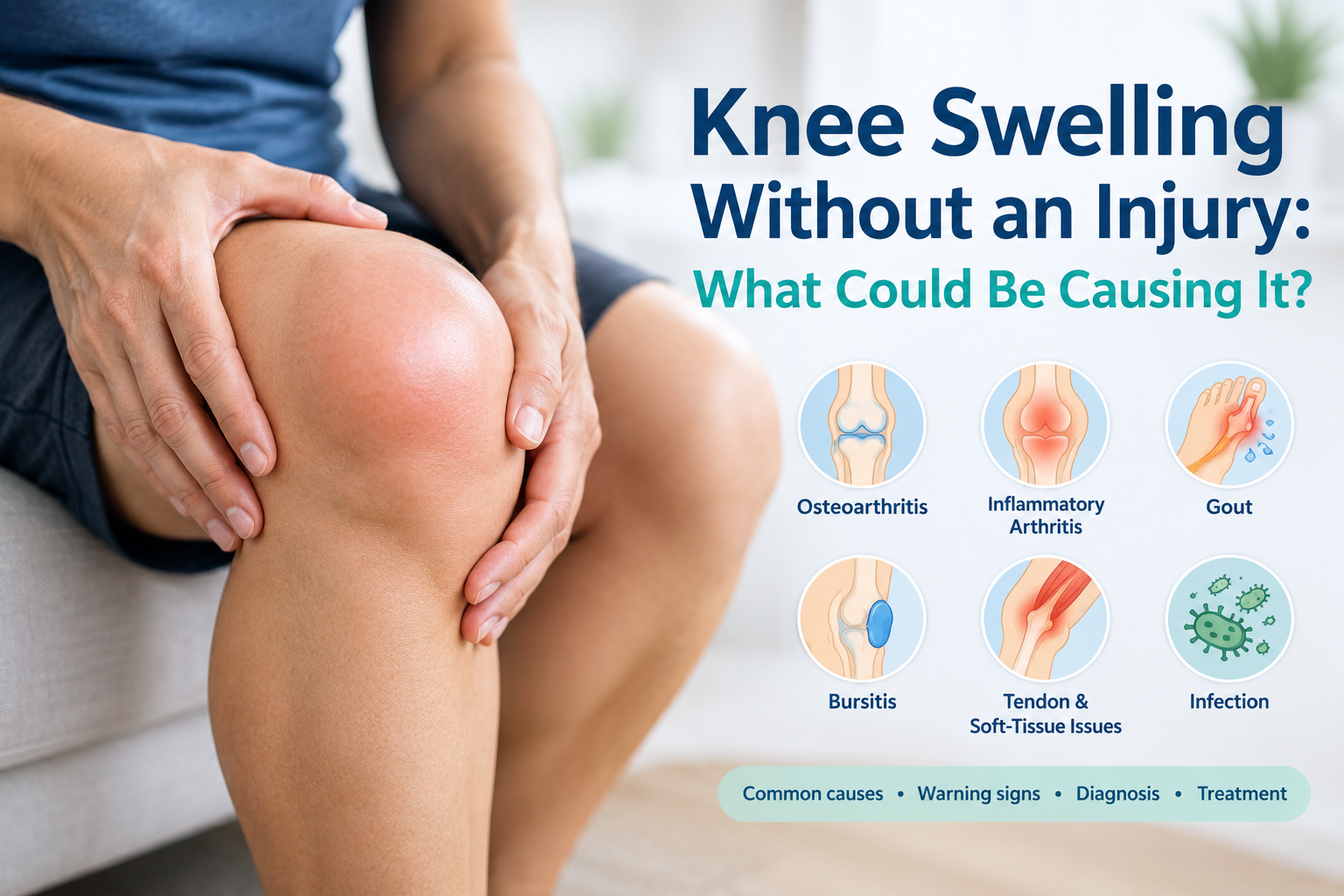
You get out of bed, put your foot down, and your knee feels tight and puffy. You didn’t fall. You didn’t twist it playing cricket or slip on wet stairs. So why is it swollen? Knee swelling without injury is surprisingly common, and it worries people mostly because there is no event to blame.
Sometimes a swollen knee is just an irritated joint that settles in a few days. Other times it is the first sign of arthritis, gout, or an infection. From the outside they can look exactly alike, which is why guessing rarely helps.
This guide walks through what is happening inside the joint, the usual causes, the warning signs worth taking seriously, and how doctors find the answer. If knee pain and swelling has been bothering you for a while, it should help you decide what to do next.
What Is Knee Swelling?
Knee swelling means extra fluid or inflamed tissue has collected in or around the joint. Your knee is lined with a thin membrane that makes a small amount of lubricating fluid. When that lining gets irritated, it makes more than the joint needs, and the knee puffs up.
Doctors usually ask first where the puffiness is. With knee joint swelling, the extra fluid sits inside the joint capsule. In other cases it collects in the soft tissue outside, such as the small cushioning sacs or the layers under the skin.
Inflammation drives a lot of this. It is the body’s response to irritation, infection, or an immune system acting on false alarms. Knee inflammation brings extra blood and fluid to the area, which is why the joint often feels warm, tight, and sore to bend.
When a lot of fluid in the knee builds up inside the joint, the shape changes. The little hollows on either side of the kneecap fill in, and the whole area looks round and full.
That fluid is called synovial fluid, and a normal amount of knee joint fluid is a good thing. It works like oil in a hinge, keeping movement smooth and feeding the cartilage. Trouble starts when there is too much of it, or when infection or crystals change what is in it.
You will often hear people say water on the knee. It is a handy everyday phrase, but it is not a separate disease. It simply describes extra fluid around or inside the joint, and the real question is always what put it there.
The medical word is knee effusion. Like the everyday phrase, it describes what a doctor finds on examination, not what caused it.
A swollen knee joint can feel stretched or full, and bending or straightening it all the way may be difficult. Some people first notice it when their trousers suddenly feel tight around the knee.
Common Causes of Knee Swelling Without an Injury
There is no single answer. The list of knee swelling causes is long, and the likely culprit depends on your age, your health history, how fast the puffiness appeared, and what other symptoms came with it. Here are the ones doctors see most often.
Osteoarthritis
Osteoarthritis is the slow wearing down of the cartilage that cushions the joint. It becomes common after middle age, and earlier if you carry extra weight, have had joint problems before, or have it in the family. As the cartilage thins, the joint lining gets irritated and makes extra fluid. That is why osteoarthritis knee swelling tends to come and go, often worse after a long day on your feet.
Morning stiffness that eases within half an hour is a typical clue. Staying at a healthy weight, strengthening the thigh muscles, and pacing your day can all help settle osteoarthritis knee swelling over time, though it rarely vanishes overnight.
Rheumatoid Arthritis and Other Inflammatory Conditions
Rheumatoid arthritis is an autoimmune condition, which means the immune system mistakenly attacks the joint lining. It often affects both knees and other joints such as the wrists and fingers, and morning stiffness can last well over an hour. Psoriatic arthritis and lupus can behave similarly.
With inflammatory types, arthritis knee swelling can be persistent or keep flaring up. Early treatment protects the joint from lasting damage, so a long-running pattern should not be brushed off.
Gout
Gout happens when uric acid forms tiny, sharp crystals inside a joint. The big toe is the classic target, but the knee gets hit too. An attack often arrives overnight, with intense pain, redness, heat, and tight, shiny skin.
Gout knee swelling can hurt so much that even a bedsheet feels unbearable. Because a joint infection can look almost identical, a doctor may want to test the joint fluid before settling on a diagnosis.
Between attacks the knee may feel perfectly normal, so people assume the problem is gone. Recurring gout knee swelling usually means uric acid is still running high, and long-term treatment aims to bring it down.
Knee Joint Effusion
An effusion is simply fluid collecting inside the joint. A knee effusion is a symptom, not a diagnosis. It is like a smoke alarm: it tells you something is wrong, but not whether it is burnt toast or a real fire.
The fluid can be clear, cloudy, or sometimes bloody, and its appearance helps point toward the cause. Draining it without finding the reason usually just means it comes back.
Bursitis
Bursae are small fluid-filled sacs that cushion the gaps between bone, tendon, and skin. When one gets inflamed, you see localized swelling around the knee, often a soft lump over the kneecap or on the inner side just below the joint.
Kneeling for long periods, whether for floor work, gardening, or prayer, is a common trigger. Repeated friction is one of the everyday knee inflammation causes in people whose work or habits keep pressure on the front of the knee. Gout and infection can also inflame a bursa.
Tendon and Soft-Tissue Problems
You do not need a dramatic fall to irritate the structures around the knee. Running, cycling, climbing stairs, or standing for long hours can inflame the tendons, and many of the knee inflammation causes seen in active people come down to a sudden jump in activity or too little recovery between sessions.
Among the more everyday swollen knee causes, this one is usually milder. The puffiness sits close to the sore spot and tends to settle with rest and a slower return to activity.
Knee Infection
An infected joint, sometimes called septic arthritis, is the one cause you never want to miss. Bacteria can reach the joint through the bloodstream, a skin wound, a recent procedure, or an injection. People with diabetes, weak immunity, or an existing joint problem are at higher risk.
The typical knee infection symptoms are severe pain, heat, redness, marked puffiness, fever or chills, and real difficulty moving the leg. Fever can be absent, though, especially in older adults.
Of all the swollen knee causes, infection is the one you should least try to wait out. Delay can permanently damage the joint, so it needs urgent medical assessment.
Other Possible Medical Causes
A Baker’s cyst is a fluid-filled lump behind the knee, often linked to arthritis or cartilage wear. Pseudogout, caused by a different type of crystal, can mimic gout. Less often, a painful swollen calf points to a blood clot in a deep vein, and leg swelling can come from heart, kidney, or liver problems. One-sided or unusual leg swelling should always be checked.
Put simply, the knee swelling without injury causes run from everyday overuse and wear to inflammatory disease, crystals, and infection. That range is exactly why guessing at home rarely works.
Can Your Knee Be Swollen Without Pain?
Yes. Knee swelling without pain usually appears when a small amount of fluid builds up slowly, giving the joint time to stretch and adjust. It can happen with mild osteoarthritis, some long-term joint conditions, and cysts. You might only notice because one knee looks bigger than the other.
A swollen knee that does not hurt still deserves attention. If it lasts more than a couple of weeks, keeps returning, or slowly grows, get it checked. Some conditions damage a joint quietly, and early diagnosis gives you more options.
Sudden Knee Swelling vs. Chronic Knee Swelling
Sudden knee swelling that appears over a few hours, especially with heat, redness, and strong pain, points toward gout, infection, or a flare of inflammatory arthritis. These need prompt attention, not a wait-and-see approach.
Chronic knee swelling builds up over weeks or months, or keeps coming back. It is more often linked to osteoarthritis, long-term inflammatory arthritis, a cyst, or a cartilage problem. It is less dramatic, so people get used to it, but ongoing puffiness is still a sign the joint is unhappy.
Many people notice knee stiffness and swelling together. Stiffness lasting longer than half an hour in the morning leans toward an inflammatory cause, while brief stiffness after sitting is more typical of osteoarthritis. It is a clue, not a diagnosis.
Location matters too. Noticing swelling around knee in one spot, like a soft bump over the kneecap, suggests bursitis. A lump behind the knee may be a Baker’s cyst, while an evenly full, rounded joint suggests fluid inside it.
Your doctor will want to know how the knee swelling started, how long it has lasted, whether other joints are involved, and whether you have had fever, skin problems, or a history of gout, diabetes, or blood-thinner use. Jot these down before the appointment.
Age shapes the picture as well. In younger, active people, the commoner knee pain causes are overuse and soft-tissue irritation. After fifty, wear-related arthritis climbs higher on the list.
Symptoms That May Occur Alongside Knee Swelling
Common knee swelling symptoms include a puffy or tight look, warmth, redness, stiffness, trouble bending or straightening the leg, and difficulty walking. Some people feel the knee might give way, or notice puffiness around the kneecap.
What you feel alongside the puffiness gives useful hints, and each of the usual knee pain causes has its own signature. Osteoarthritis tends to ache after activity, gout strikes suddenly and hard, bursitis is tender at one spot, and infection brings severe, constant pain. These patterns overlap, so treat them as clues rather than answers.
A swollen knee joint that also feels warm or looks red deserves more attention than puffiness alone, even if the pain is only moderate.
Seeing knee swelling and pain together does not automatically mean something serious. When heat, redness, or fever join in, though, the picture changes and it is time to get checked.
Fluid trapped inside the joint can make knee joint swelling feel springy when pressed and limit how far you can bend. That is one reason stairs and squatting become difficult first.
When Is Knee Swelling a Medical Emergency?
A swollen knee needs urgent medical help if you notice any of these:
- A knee that is hot, red, and markedly swollen, especially with fever or chills
- Swelling that is severe or develops very quickly
- Severe pain or being unable to put weight on the leg
- Very limited movement of the joint
- Swelling along with feeling seriously unwell
Remember that knee infection symptoms can be subtle in older adults and people with weak immunity, and fever is not always present. A suspected joint infection needs urgent assessment. Do not wait for a routine appointment, and do not treat it yourself with leftover antibiotics. Go to an emergency department or see a doctor the same day.
How Is the Cause of Knee Swelling Diagnosed?
Because knee swelling causes vary so widely, doctors start with a conversation and a hands-on exam. They will ask about your symptoms and history, then check for warmth, tenderness, fluid, range of movement, and how you walk.
Tests depend on what is suspected. An X-ray shows joint wear and arthritis changes, and an MRI is sometimes used if a cartilage or ligament problem is likely.
Ultrasound is quick and painless, and it is good at showing how much fluid in the knee there really is, or whether a cyst or inflamed bursa is responsible.
Blood tests look for signs of knee inflammation, along with uric acid levels and markers of autoimmune disease or infection.
If there is a lot of fluid, or gout or infection is a worry, the doctor may do a joint aspiration, drawing a small sample out with a needle. It can also ease pressure.
Looking at the knee joint fluid under a microscope can reveal infection, crystals, or other abnormalities. Often it is the single most useful test when the cause is not obvious.
Knee Swelling Treatment: What Helps?
Good knee swelling treatment depends on the cause, not just the puffiness. A cold pack will not fix gout, and arthritis medicine will not clear an infection. So the first job is working out what is behind it.
While you wait to be seen, a few simple steps can help:
- Rest the knee and cut back on activities that aggravate it
- Apply a cold pack wrapped in a towel for 15 to 20 minutes at a time
- Keep the leg raised when sitting or lying down
- Use a light compression sleeve or bandage if it feels comfortable, never tight
These measures give some knee swelling relief for a day or two, but they are comfort steps, not a cure. Persistent, recurring, or unexplained puffiness needs a medical evaluation.
The right treatment for swollen knee problems depends on the diagnosis. Arthritis may be managed with exercise, physiotherapy, weight management, medicines, or sometimes injections. Gout is treated with medicines for the attack and, later, to lower uric acid. Bursitis often settles with rest and avoiding pressure. A suspected infection means urgent antibiotics and often a hospital procedure to wash out the joint.
Gentle movement and physiotherapy often help with knee stiffness and swelling from arthritis, provided a professional guides the exercises and the joint is not in the middle of a hot flare.
Please do not self-medicate with prescription drugs or leftover antibiotics. Any knee swelling treatment plan should come from a clinician who knows your history. And if you have kidney disease, stomach ulcers, heart problems, or take blood thinners, check with a doctor before using painkillers or anti-inflammatory medicines, even over-the-counter ones.
When Should You See an Orthopedic Doctor for Knee Pain?
Consider booking an orthopedic doctor for knee pain if the puffiness lasts beyond a week or two, keeps returning, limits movement, or comes with pain you cannot explain. Worsening swelling deserves a look sooner rather than later.
If knee pain and swelling are starting to affect your sleep, your walking, or your daily routine, that alone is reason enough to get examined, even when nothing feels like an emergency.
The exception is the emergency picture described above. A hot, red, tightly swollen joint, fever, or inability to bear weight needs urgent care, not a routine appointment next week.
Frequently Asked Questions
1. What causes knee swelling without an injury?
The usual suspects are osteoarthritis, inflammatory arthritis, gout, bursitis, tendon overuse, and infection. The knee swelling without injury causes also include cysts and a few conditions outside the joint.
2. Can knee swelling go away on its own?
Mild puffiness from overuse often settles with rest. Chronic knee swelling, or puffiness that returns or comes with heat or fever, needs a medical check.
3. Why is my knee swollen but not painful?
Slow fluid build-up, mild arthritis, or a cyst can cause knee swelling without pain. Painless does not mean harmless, so persistent puffiness should still be examined.
4. What is the difference between knee effusion and inflammation?
A knee effusion is extra fluid in the joint. Inflammation is the body’s irritation response, and it is one of the main reasons fluid builds up in the first place.
5. Is water on the knee a serious condition?
Water on knee is a description, not a disease. How serious it is depends entirely on the cause, from mild irritation to infection.
6. Can arthritis cause knee swelling without an injury?
Yes. Osteoarthritis and inflammatory types such as rheumatoid arthritis commonly cause arthritis knee swelling with no accident involved.
7. Does gout cause sudden knee swelling?
It can. A gout attack often brings sudden knee swelling with intense pain, redness, and warmth, and it can look very similar to an infection.
8. How can I reduce knee swelling at home?
Rest, a towel-wrapped cold pack, elevation, and gentle compression can give some knee swelling relief. They ease symptoms but do not treat the cause.
9. When should I worry about a swollen knee?
Worry if the knee is hot, red, severely painful, or hard to move, or if you have a fever or feel very unwell. These knee swelling symptoms call for urgent help.
10. Which doctor should I consult for knee swelling?
An orthopedic doctor for knee pain is a good first choice. A rheumatologist helps if an autoimmune or crystal condition is suspected, and emergency care is the right call for warning signs.
Conclusion
Knee swelling without injury nearly always has a reason. The common ones are osteoarthritis, inflammatory arthritis, gout, bursitis, overuse, and sometimes infection, and which one it is decides everything that follows.
That is why the right treatment for swollen knee problems starts with a diagnosis. Rest and ice may ease things for a day or two, but they cannot replace finding the cause.
If knee swelling and pain are persistent, recurring, unexplained, or getting worse, see a doctor rather than waiting it out. If any emergency warning sign appears, seek urgent care straight away.