
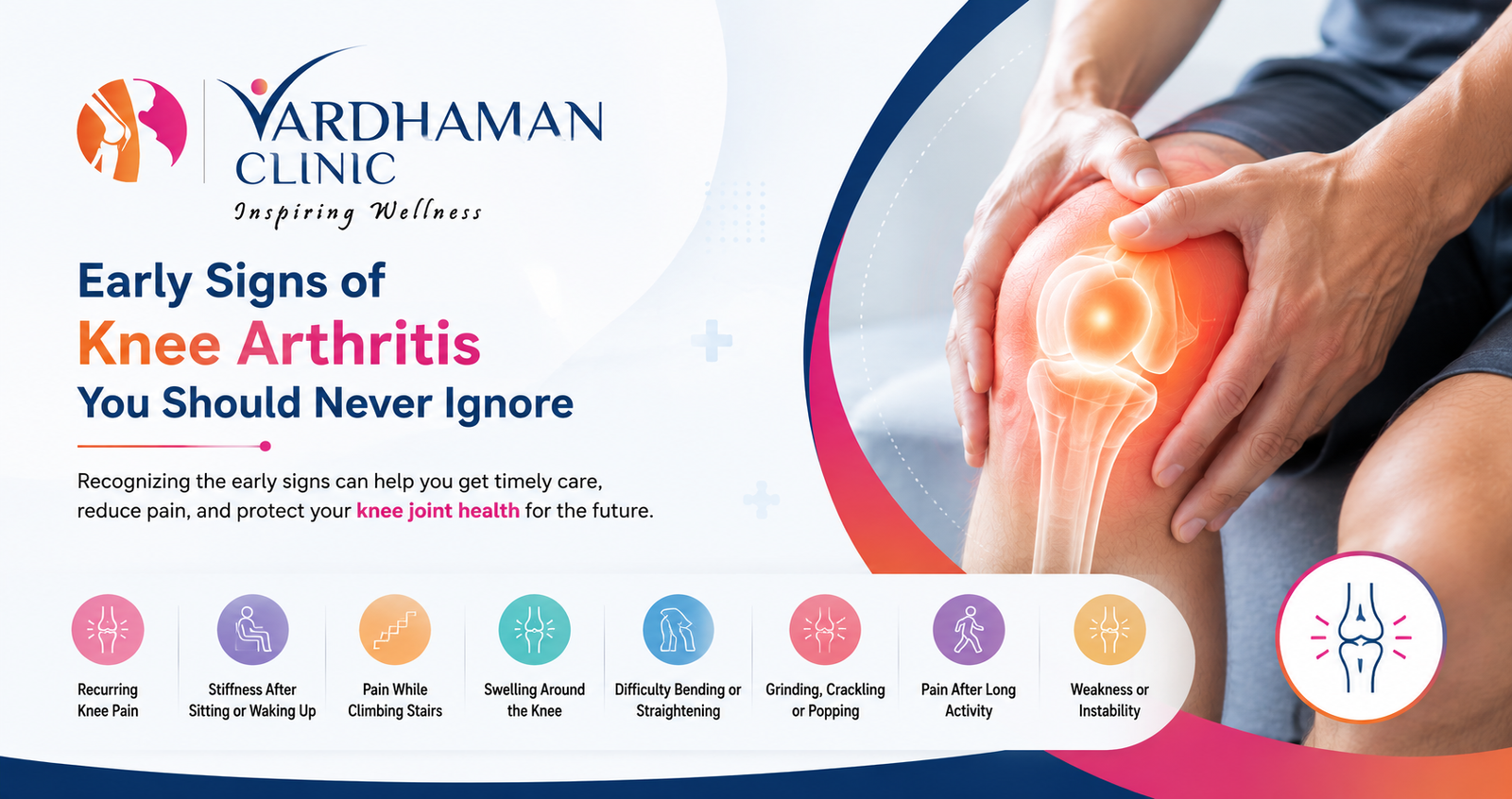
Most of us blame knee pain on getting older, or on overdoing it at the gym last week. Honestly, that’s usually the real reason. But when the pain, stiffness, or swelling refuses to go away, when it keeps circling back week after week, it might actually be one of the early signs of knee arthritis rather than just something you can walk off. Sometimes it starts as early knee arthritis symptoms so mild you barely register them as anything worth mentioning to a doctor.
Here’s the thing though: catching it early won’t undo the condition. What it can do is give you a real head start. Recognizing the warning signs of knee arthritis in time and getting proper medical attention can slow it down, take the edge off the pain, and let you hold onto the life you’re used to for a lot longer than if you just kept ignoring it. That’s the whole point of paying attention to these early signals, protecting your knee joint health before you’re forced into damage control.
What Is Knee Arthritis, Exactly?
Strip it down and knee arthritis is just changes happening inside the joint, changes that cause pain, stiffness, swelling, and trouble moving. Osteoarthritis of the knee is the version most people run into, and it builds up slowly, over years usually, as the cartilage cushioning the joint wears thinner and thinner.
There’s more than one kind of arthritis in the knee, though, not just osteoarthritis. So it’s worth actually working out what’s causing your knee joint pain instead of jumping straight to osteoarthritis every single time.
1. Knee Pain That Keeps Coming Back
Probably the most recognizable of the early symptoms of knee arthritis: pain that shows up tied to something specific, a long walk, a workout, a set of squats, a few flights of stairs, and then fades. Then comes back. Then fades again. Left alone long enough, this on-and-off pattern is often how chronic knee pain actually gets started.
Some people feel it as a deep ache buried somewhere inside the joint. Others feel it more toward the front or the sides. Doesn’t really matter which, if the same pain keeps returning after the same kinds of things, that’s a pattern, not bad luck.
One sore knee after a rough leg day isn’t a big deal. It’s when the soreness turns into a routine, or starts showing up in things you never used to think twice about, that it’s worth actually paying attention.
2. Stiffness After Sitting or Waking Up
You know the feeling. You stand up after sitting a while and your knee needs a second before it’ll cooperate. That’s another possible sign of knee arthritis. This kind of knee stiffness shows up in a lot of ordinary moments, first thing in the morning, after too long at your desk, on a long drive, after sitting through a movie you probably should’ve paused halfway through.
Early on, moving around usually loosens it up fine. But if the stiffness keeps returning, especially with pain or trouble moving the joint the whole way, that’s worth mentioning to a doctor rather than pushing through it every time it happens.
3. Pain While Climbing or Descending Stairs
Stairs have a way of exposing knee trouble that flat ground quietly hides. Knee pain while climbing stairs starts feeling like way more effort than it should, and going down tends to be worse, since it puts even more strain through the joint on the way.
If stairs are getting harder to deal with, especially with some swelling or stiffness thrown in, that’s one of the more telling warning signs of knee arthritis you’ll come across.
4. Swelling Around the Knee
Swelling that keeps coming back isn’t something to just shrug off. Irritation inside the joint can leave the knee puffy or feeling tight, and a swollen knee joint often flares up after activity for a lot of people and settles down again with rest.
Get knee swelling checked if it’s persistent, or if it keeps showing up alongside pain and stiffness. It can come from more than one cause. Guessing isn’t really worth the risk.
5. Difficulty Fully Bending or Straightening the Knee
Losing range of motion happens slowly. That’s exactly why it’s an early sign of knee arthritis that so many people miss. Usually it shows up as small things getting a bit harder: squatting down, sitting on the floor, getting up from a low chair, bending the knee all the way, straightening the leg fully, climbing in and out of a car.
None of it announces itself. Compare how your knee moves today to how it felt a few months back, though, and the difference is often pretty obvious once you actually stop and check.
6. Grinding, Crackling, or Popping Sensations
Clicking or popping when you bend or straighten the knee is common enough, and most of the time it means nothing at all. Knees just do that sometimes, for no real reason.
It’s worth watching when that sound shows up together with pain, stiffness, swelling, or trouble moving. The noise itself usually isn’t the issue. What’s happening around it is.
7. Knee Pain After Long Periods of Activity
Early knee osteoarthritis symptoms tend to show up after activity that puts sustained load on the joint over time. Someone handles a twenty-minute walk fine, no problem, but starts feeling it on anything longer. Knee pain while walking longer distances, standing a full shift at work, a long day of traveling or shopping, all common early triggers people mention.
Instead of fixating on how bad the pain feels right in the moment, it’s usually more useful to just notice whether the amount of activity you can handle before it kicks in is quietly shrinking over time.
8. Weakness or a Feeling That the Knee May Give Way
Some people feel their knee go weak or unstable, and without even realizing it, start being more careful on uneven ground, when turning quickly, on stairs, getting up out of a chair. Small shift in behavior. But it changes how you move through your day without you really clocking it happening.
Instability can come from plenty of things besides arthritis. Still, take it seriously when it shows up alongside other knee symptoms that won’t quit. A doctor can help sort out whether it’s arthritis, weak muscles, an old injury, a ligament issue, or something else altogether.
Your Daily Routine Can Reveal Knee Arthritis
Honestly? One of the simplest ways to catch a developing knee problem is to just look at your own habits and ask what’s actually changed lately.
Maybe the walk to the market feels harder than it used to. Maybe stairs you never gave a second thought to now take real effort. Maybe you’ve quietly started skipping squats, cutting workouts short, taking more breaks than usual without really admitting it to yourself. None of that seems like much on its own. A few of these showing up together, though, usually means the knee isn’t handling things the way it used to.
Is Every Knee Pain a Sign of Arthritis?
No, not even close. Knee pain doesn’t automatically mean arthritis. There are plenty of other knee pain causes out there, injuries, tendon problems, ligament issues, a torn meniscus, bursitis, weak muscles, and other joint conditions can all cause symptoms that look a lot alike on the surface.
Googling your symptoms only gets you so far because of this. Where the pain sits, how long it’s stuck around, how bad it is, what triggers it, past injuries, your age, how active you are, all of that feeds into what’s actually going on.
What Increases the Risk of Knee Osteoarthritis?
Age plays a part, sure, but it’s nowhere near the whole story. Old knee injuries, extra body weight, repetitive stress on the joint, genetics, weak muscles, certain health conditions, all of it can push the risk up in different ways.
A history of knee injury deserves its own callout here, since damage from years back can still shape how the joint holds up much later in life. Knowing what raises your own risk makes it easier to stay ahead of your knee joint health instead of only reacting once it already hurts.
How Is Knee Arthritis Diagnosed?
No single symptom seals the diagnosis by itself. A doctor usually works from your symptoms, your history, and a hands-on exam, checking pain and tenderness, swelling, range of motion, joint stability, muscle strength, and how the knee handles movement.
Depending on what turns up, an X-ray or other tests might follow, especially if they want to rule out a different type of arthritis or something else entirely. A real knee arthritis diagnosis comes from putting the whole picture together, not any one symptom by itself.
Knee Arthritis Treatment: Can It Be Managed Without Surgery?
Not automatically, and honestly, that’s the good news here. What helps depends on how severe things are, what’s causing it, your overall health, how active you are day to day. Knee arthritis treatment without surgery usually includes the right kind of physical activity, strengthening work, physiotherapy, adjusting how you move, managing weight where that applies.
A healthcare professional can help work out which of those actually fit your situation. The goal, broadly, is simple: ease the discomfort, keep the knee moving, build up the muscles supporting it, let you keep doing what you normally do without thinking twice about it.
Why Ignoring Early Symptoms Can Be a Problem
When the knee starts hurting, the natural move is to just do less. Skip the workout. Avoid the stairs. Walk a shorter route. Sit more. Makes sense in the moment, honestly. But that drop in activity weakens the muscles around the joint, which makes movement even harder, and the whole thing starts feeding itself, sometimes turning into the kind of chronic knee pain that’s a lot harder to shake off once it settles in.
Noticing the early signs isn’t about assuming the worst. It just means paying attention when something shifts, and actually getting it checked instead of hoping it quietly disappears on its own.
When Should You See an Orthopedic Specialist?
Get the knee looked at if symptoms are sticking around, getting worse, or making everyday life harder. A few situations worth flagging:
- Knee pain that keeps coming back
- Swelling that shows up repeatedly
- Stiffness affecting how you move day to day
- Walking becoming genuinely difficult
- Stairs getting more and more painful
- A knee that feels weak or unstable
- Range of motion that’s noticeably shrinking
- Pain affecting sleep or your daily routine
- Symptoms that haven’t budged despite rest and basic changes
Sooner is better here. It just makes it easier to pin down what’s actually going on before things get more complicated.
Common Myths About Knee Arthritis
People carry around a lot of assumptions about this condition, and some of them are worth clearing up.
Take the idea that knee arthritis only happens to older people, for one. Age raises the odds, sure, but past injuries, genetics, body weight, and repetitive joint stress can bring it on at pretty much any age, younger people included.
Then there’s the assumption that every clicking knee means arthritis. It doesn’t. Knees click and pop for all sorts of reasons, and the sound on its own proves nothing.
A lot of people also think exercise should be avoided entirely once arthritis is in the picture. Actually the opposite tends to be true, the right kind of exercise and strengthening work can genuinely help manage symptoms. It’s about matching the type and intensity to the person, not cutting movement out altogether.
And surgery isn’t automatic either, despite what a lot of people assume. It depends entirely on severity and the person’s own situation. Plenty of people manage well with non-surgical treatment, at least for a good while.
Frequently Asked Questions
What are the first signs of knee arthritis? Recurring pain, stiffness after resting, swelling, trouble on stairs, less range of motion, discomfort after being active for a while.
What does early knee arthritis feel like? Usually an ache, some stiffness, tenderness, or general discomfort while moving, often only after specific activities at first.
Can knee arthritis start suddenly? It usually builds up slowly, even if it feels sudden the day you finally notice it. Pain and swelling that hit hard and fast are more likely something else, and worth getting checked promptly.
Is knee stiffness an early sign of arthritis? Yes, recurring knee stiffness can be one of the early symptoms of knee arthritis, especially alongside pain or reduced movement.
Does walking cause knee arthritis? No. Movement is generally good for joint health. If you already have knee problems though, knee pain while walking longer distances is a sign you might need to dial back how much or how hard you’re going.
Can early knee arthritis be treated without surgery? Often, yes. Depending on the cause and severity, knee arthritis treatment can start with exercise, strengthening, physiotherapy, and activity changes, guided by a healthcare professional.
Final Thoughts
The earliest signs of knee arthritis are small enough to brush right past. A little stiffness after sitting. Some discomfort on the stairs. Swelling that keeps coming back. Pain after a walk that used to feel effortless. None of it seems like much when you look at any one of them alone.
But once these start happening regularly, or start getting in the way of things you never used to think twice about, they’re worth paying attention to. Instead of chalking up ongoing knee pain to just getting older, figure out what’s actually behind it while the problem is still manageable. Recognizing the early signs of knee arthritis and the warning signs of knee arthritis in time, moving the right way, building strength, getting checked when something changes, that combination goes a long way toward protecting your knee joint health and keeping you living the active life you’re used to.