
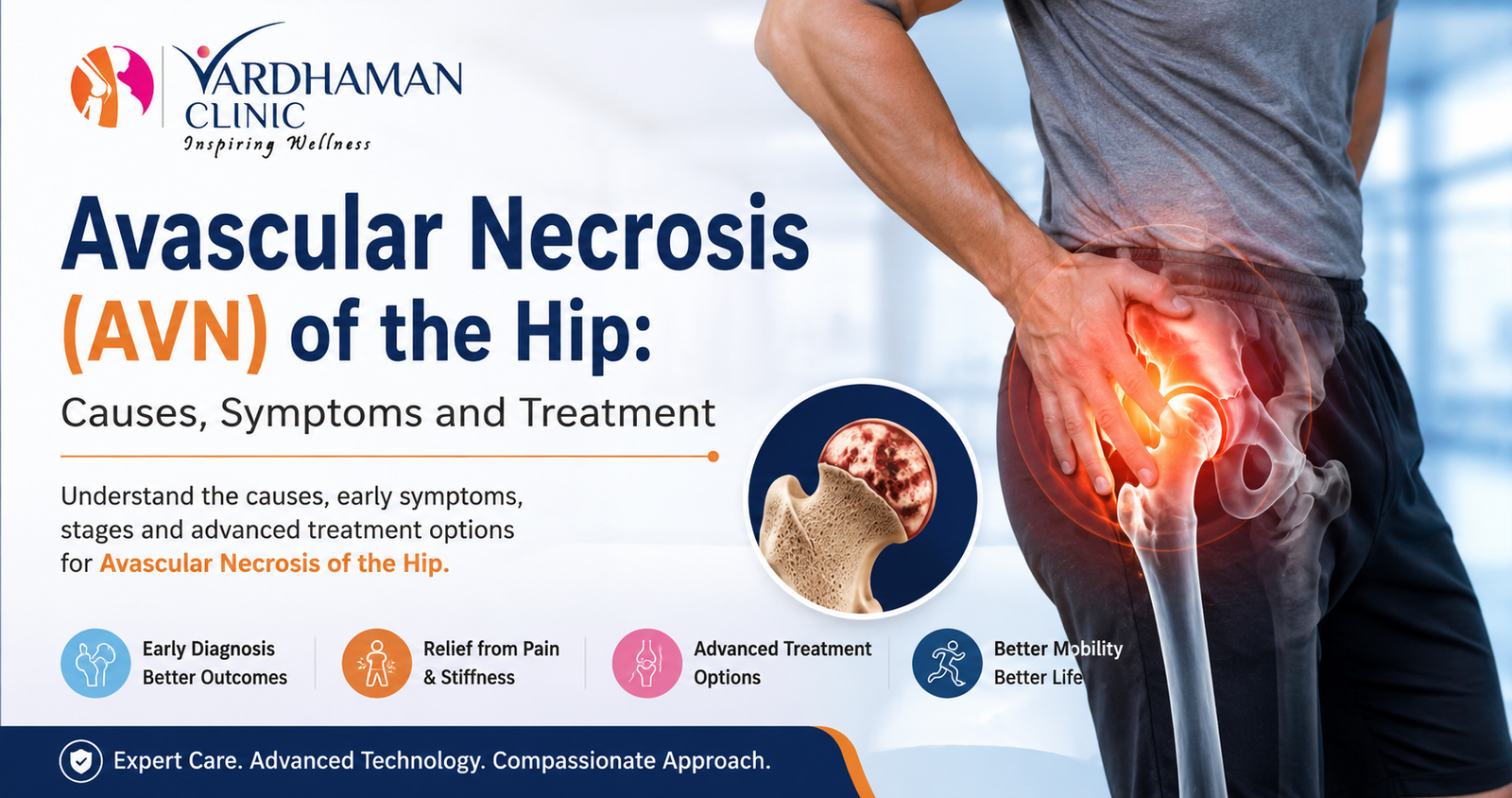
If you are a young, otherwise healthy adult dealing with hip pain that will not go away, and your doctor has mentioned avascular necrosis instead of the more familiar term “arthritis,” you are probably confused and a little worried. That confusion is completely normal. Most people have heard of arthritis, but very few have heard of avascular necrosis of the hip, also called AVN, osteonecrosis, or hip bone death.
In simple words, avascular necrosis happens when the blood supply to the top of the thigh bone (called the femoral head) gets cut off or reduced. This is one of the main hip bone death causes that doctors look for when a younger patient reports ongoing hip pain. Bone is living tissue, and just like any other part of the body, it needs a constant supply of blood to stay healthy. When that supply is disrupted, bone cells start to die. Over time, this weakens the bone structure, and if it is not caught early, the femoral head can collapse, leading to severe AVN hip pain, stiffness, and eventually the need for hip replacement for AVN.
This blog will help you understand the AVN hip causes, the early avascular necrosis symptoms to watch for, how doctors confirm an avascular necrosis diagnosis using X-rays and avascular necrosis MRI scans, the different AVN stages, and whether avascular necrosis without surgery is a realistic option. We will also cover the best avascular necrosis hip treatment choices at every stage, including hip osteonecrosis treatment, avascular necrosis recovery, avascular necrosis stage 3 treatment, when AVN hip replacement becomes necessary, and simple avascular necrosis prevention tips. Along the way, you will also learn why avascular necrosis in young adults is more common than most people realise, and how AVN due to steroids develops. If you are searching for the best hip specialist in Nerul or a trusted orthopedic surgeon in Navi Mumbai, this guide also explains how Dr. Abhay Chhallani, an experienced specialist treating patients across Nerul, Panvel and Navi Mumbai, approaches diagnosis and treatment for this condition.
What Is Avascular Necrosis of the Hip?
Avascular necrosis (AVN) literally means “bone death due to lack of blood.” The hip joint is a ball-and-socket joint, where the ball is the rounded top of the femur, known as the femoral head. This area gets its blood supply through a fairly delicate network of small blood vessels. Because the hip bears the full weight of the body, it is one of the most common sites affected by AVN, though the condition can also occur in the knee, shoulder, and ankle.
When blood flow to the femoral head is interrupted, even for a short period, the bone tissue in that area starts to weaken and die. Since bone does not repair itself quickly like skin or muscle, the damage builds up silently. Many patients do not feel much pain in the early stages, which is exactly why AVN often gets diagnosed later than it should.
Unlike osteoarthritis, which usually develops gradually due to wear and tear over decades, avascular necrosis in young adults can appear suddenly, often between the ages of 25 and 50. This is one of the biggest reasons patients feel caught off guard by the diagnosis.
What Causes AVN? Understanding the Risk Factors
Understanding the AVN hip causes is important because many of them are preventable or manageable. Here are the main risk factors doctors look for:
1. Long-Term or High-Dose Steroid Use
AVN due to steroids is one of the most well recognised causes. Corticosteroids, when taken in high doses or for a long duration (for conditions like asthma, autoimmune diseases, or after organ transplants), can increase fat levels in the blood. These fat particles can block the tiny vessels feeding the femoral head, cutting off circulation.
2. Excessive Alcohol Consumption
Regular heavy drinking over several years can also lead to fatty deposits building up in the blood vessels, restricting blood flow to the bone in a similar way to steroids. This is one of the most common causes seen in adults presenting with unexplained hip pain.
3. Trauma or Injury
A hip fracture, dislocation, or any significant trauma can directly damage the blood vessels supplying the femoral head. Even if the fracture heals well, the blood supply disruption can silently progress into AVN months or years later.
4. Medical Conditions
Certain diseases are linked to a higher risk of hip bone death, including:
- Sickle cell disease
- Lupus and other autoimmune disorders
- Gaucher’s disease
- HIV infection
- Chronic kidney disease
- Blood clotting disorders
5. Other Contributing Factors
Smoking, poor diet, radiation therapy, decompression sickness (common in deep-sea divers), and certain long-term medications can also reduce blood flow to bone and add to the risk.
6. Idiopathic AVN
In a fair number of cases, doctors are unable to pinpoint an exact cause. This is called idiopathic avascular necrosis, and it can occur even in people with no obvious risk factors.
Early Warning Symptoms of AVN
One of the trickiest parts of this condition is that avascular necrosis symptoms are often mild or completely absent in the beginning. As the disease advances, patients typically notice:
- A dull, deep ache in the groin, thigh, or buttock, especially on weight-bearing
- Pain that initially comes and goes, but slowly becomes constant
- Increased pain while climbing stairs, standing for long periods, or getting up from a chair
- Stiffness and reduced range of motion in the hip
- A limp while walking, as the body tries to protect the joint
- In advanced stages, pain even while resting or lying down
Because these symptoms overlap with common conditions like muscle strain or early arthritis, many patients delay seeing a specialist. If hip pain lasts more than two to three weeks, especially if you fall into a higher risk group, it is worth getting it evaluated rather than waiting it out.
Stages of AVN: How the Condition Progresses
Doctors classify AVN stages to decide the right treatment plan and to track how the disease is progressing. The most commonly used system (ARCO classification) breaks it down as follows:
| Stage | What Happens | Typical Symptoms |
| Stage 0-1 | Blood supply is reduced, but bone shape is normal. Often only visible on MRI | Little to no pain |
| Stage 2 | Early bone changes visible on X-ray, femoral head still round | Mild, occasional pain |
| Stage 3 | Small cracks or collapse begin at the surface of the femoral head | Noticeable pain during activity |
| Stage 4 | Femoral head has collapsed and joint surface is damaged, arthritis sets in | Constant pain, stiffness, limited movement |
Catching AVN in stage 0, 1, or early stage 2 gives patients the best chance of preserving their own hip joint without needing a replacement. This is exactly why early diagnosis matters so much.
How Is Avascular Necrosis Diagnosed?
If AVN is suspected, the diagnostic process usually includes:
Physical examination, where the doctor checks range of motion, pain triggers, and gait.
X-rays, which are useful for detecting changes in later stages but often appear normal in early AVN.
Avascular necrosis MRI scans, which are the gold standard for early detection. An MRI can pick up changes in bone marrow and blood flow long before they show up on an X-ray, which is why MRI is recommended whenever AVN is suspected in its early stages.
CT scans, occasionally used to get a more detailed view of bone structure before surgery.
Blood tests, to check for underlying conditions like clotting disorders or autoimmune diseases that may be contributing to the problem.
An accurate avascular necrosis diagnosis at the right stage is what allows a specialist to recommend the most effective, least invasive treatment possible.
Can Avascular Necrosis Be Treated Without Surgery?
This is one of the most searched questions among patients, and the honest answer is: it depends on the stage.
Avascular necrosis without surgery is a realistic option only in the very early stages, before the femoral head has started to collapse. Non-surgical management usually includes:
- Activity modification: Reducing high-impact activities and weight-bearing stress on the hip to slow down damage
- Medications: NSAIDs for pain and inflammation, cholesterol-lowering drugs to reduce fat blockages, and blood thinners if clotting is the underlying cause
- Physical therapy: Targeted exercises to maintain joint mobility and strengthen the muscles supporting the hip
- Use of walking aids: Crutches or a cane to offload weight from the affected hip
- Core decompression: A minimally invasive procedure where small holes are drilled into the femoral head to relieve pressure, stimulate new blood vessel growth, and slow disease progression. This is often combined with bone grafting or stem cell therapy for better outcomes in early stages
- Bisphosphonates: Medications that may help slow bone loss in select cases
It is important to set realistic expectations here. These treatments can slow progression and manage pain in early stages, but once the femoral head has collapsed, non-surgical treatment alone generally cannot reverse the damage. Patients who ignore early symptoms often end up needing surgery sooner than those who seek treatment early.
When Does AVN Require Hip Replacement Surgery?
Once avascular necrosis reaches stage 3 or stage 4, with visible collapse of the femoral head or arthritis in the joint, hip preservation techniques usually stop being effective. At this point, AVN hip replacement becomes the most reliable way to relieve pain and restore function.
Total Hip Replacement
The damaged femoral head and socket are replaced with artificial implants made of metal, ceramic, or high-grade plastic. This is the most common and effective solution for avascular necrosis stage 3 treatment and beyond, offering long-term pain relief and near-normal mobility for most patients.
Osteotomy
In select cases, where only a small portion of the femoral head is affected, doctors may reshape the bone to shift weight-bearing away from the damaged area. This is less common and is generally reserved for younger patients with limited disease.
Recovery After Surgery
Avascular necrosis recovery after hip replacement typically involves a hospital stay of a few days, followed by physiotherapy to rebuild strength and mobility. Most patients are walking with support within a few days of surgery and can resume most daily activities within six to twelve weeks, depending on their overall health and how closely they follow their rehabilitation plan.
AVN Surgery Cost in India
One of the advantages patients in India have is access to high-quality hip osteonecrosis treatment, including joint replacement surgery, at a fraction of the cost compared to Western countries. The exact AVN surgery cost in India depends on factors like the type of implant used, the hospital, the surgeon’s experience, and whether one or both hips need treatment. It is best to discuss a personalised cost estimate directly with your surgeon after a proper evaluation, since every case is different.
Can AVN Be Prevented?
While not every case of AVN can be avoided, especially the idiopathic ones, several avascular necrosis prevention steps can meaningfully lower your risk:
- Limit alcohol intake, or avoid heavy regular drinking
- Use corticosteroids only under medical supervision, and only for as long as necessary
- Avoid smoking, which reduces blood circulation throughout the body
- Manage cholesterol and blood sugar levels
- Get prompt treatment for hip injuries or fractures
- If you have a condition like sickle cell disease or lupus, stay on top of regular check-ups so early bone changes can be caught before symptoms appear
AVN vs Osteoarthritis: Why the Diagnosis Confuses Patients
A lot of patients get confused when they are told they have AVN rather than arthritis, especially since both conditions cause hip pain and stiffness. The key difference is the cause. Osteoarthritis develops from long-term wear and tear on the cartilage, usually in older adults. AVN, on the other hand, is caused by a disruption in blood supply and can strike much younger patients, sometimes within weeks or months rather than years. Advanced AVN can eventually lead to arthritis in the joint, but the starting point of the disease is completely different, which is why the treatment approach and monitoring also differ.
When Should You See a Specialist?
You should not wait for hip pain to become unbearable before seeking help. Consult an orthopedic specialist if you notice:
- Hip, groin, or thigh pain lasting more than two to three weeks
- A history of steroid use, heavy alcohol consumption, or hip trauma along with new hip pain
- Pain that worsens with weight-bearing activity
- Stiffness that limits your normal daily movement
Early evaluation, ideally with an MRI, gives you the best chance of avoiding or delaying surgery.
Expert AVN Treatment in Nerul, Panvel and Navi Mumbai
Dr. Abhay Chhallani is an experienced orthopedic surgeon in Navi Mumbai, known for accurate diagnosis and effective, patient-focused avascular necrosis hip treatment. With a strong background in joint preservation techniques as well as advanced hip replacement for AVN, Dr. Chhallani helps patients across Nerul, Panvel and Navi Mumbai understand their condition clearly and choose the treatment path that best suits their stage of disease, lifestyle, and long-term goals.
Whether you are looking for a second opinion after an avascular necrosis diagnosis, need a detailed evaluation of unexplained AVN hip pain, or are exploring your options between non-surgical management and surgery, Dr. Chhallani’s clinic offers thorough assessment using clinical examination and imaging, along with clear guidance at every step.
If hip pain has been troubling you and you want an accurate diagnosis instead of guesswork, book a consultation with Dr. Abhay Chhallani, widely regarded as the best hip specialist in Nerul and a trusted name in hip osteonecrosis treatment across Navi Mumbai and Panvel.
Frequently Asked Questions
1. Is avascular necrosis of the hip curable?
Early stage AVN can often be managed effectively with non-surgical treatment, slowing or even halting progression. Once the femoral head collapses, hip replacement surgery is usually needed to restore function and eliminate pain.
2. Can young people get AVN?
Yes. Unlike osteoarthritis, avascular necrosis in young adults is fairly common, particularly among those with a history of steroid use, heavy alcohol consumption, or hip injury.
3. How is AVN different from a simple hip strain? |
A muscle strain typically improves within a week or two with rest. AVN pain tends to persist, gradually worsen, and is often linked to an underlying risk factor like steroid use or trauma.
4. Does AVN affect both hips?
It can. In many patients, especially those with steroid-related or alcohol-related AVN, both hips are affected, though not always at the same stage.
5. What is the best imaging test for detecting AVN early?
An MRI is the most sensitive test for catching avascular necrosis before it shows up on a regular X-ray, making it the preferred choice for early diagnosis.