
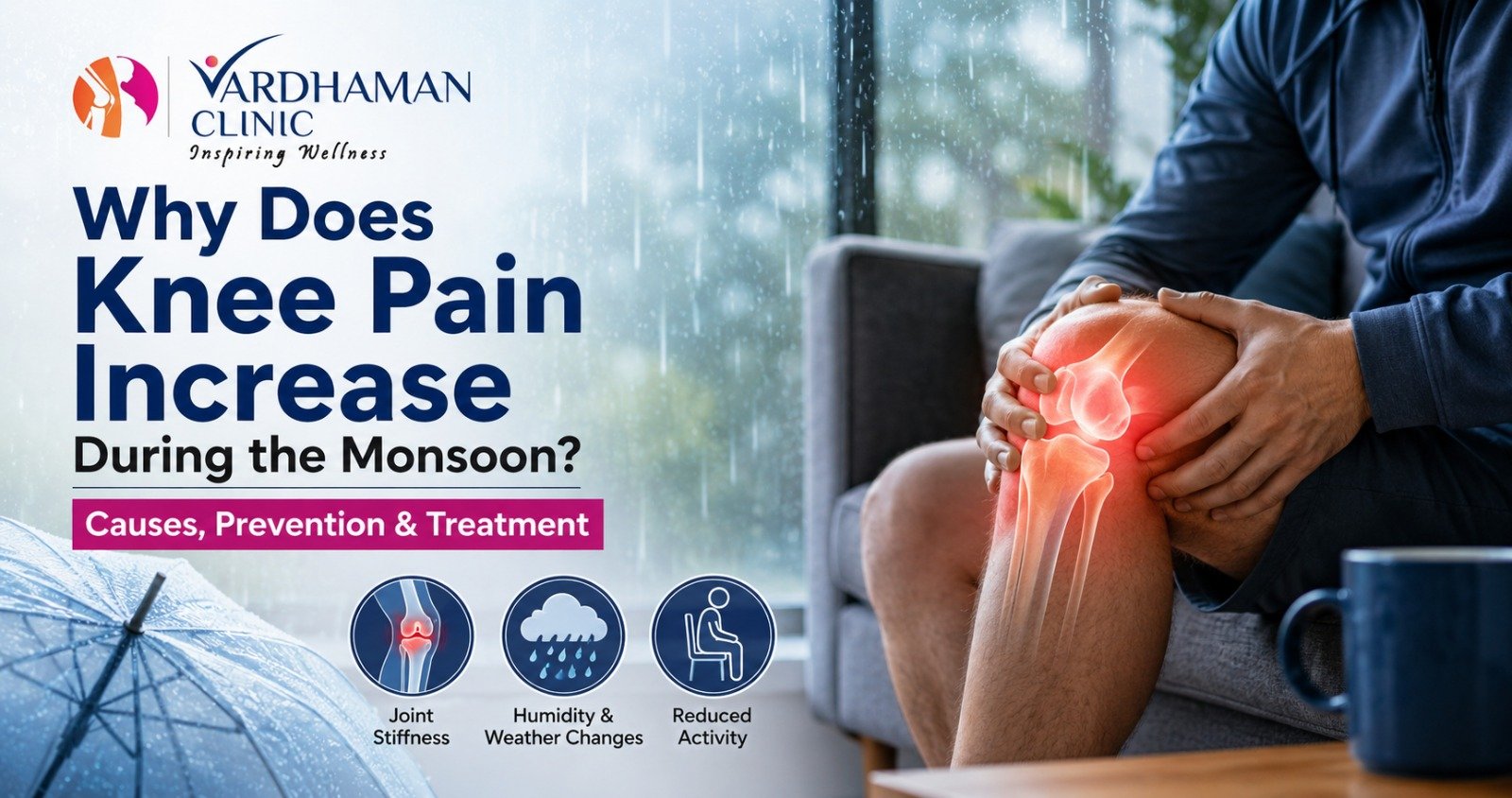
The moment monsoon hits, knee pain seems to get louder. Maybe it’s a walk in the rain, the damp air, or just sitting inside more than usual. Whatever the reason, knees start feeling stiffer, and if you already deal with Knee arthritis or an old injury, you’ll probably feel it first.
Rain doesn’t actually cause knee pain on its own. Weather doesn’t create arthritis, and it doesn’t damage a joint by itself either. What it does is shift temperature, humidity, and how much you move around, and those shifts change how existing pain feels.
What’s Really Behind the Pain
Humidity climbs fast once the monsoon arrives. People with joint conditions often say they feel stiffer right around when the weather turns, and air pressure changes might play a role too, affecting the tissue around a joint that’s already sensitive. Nobody has fully mapped out why weather and pain track together, but ask around and most people with arthritis will tell you they notice a difference.
Then there’s the activity problem.
Rain makes it harder to walk or exercise outside. People naturally end up sitting more, and a knee joint that isn’t moving gets stiff. Regular activity is part of what keeps the muscles around it strong and the joint mobile, so cut that movement suddenly and the stiffness catches up fast. It turns into a loop: less movement, more stiffness, moving feels worse, so you move even less. The only real way out is staying active somehow, even indoors.
For people who already have knee arthritis, monsoon tends to bring more aching. Osteoarthritis happens when cartilage in the joint wears down over time, showing up as pain during movement, stiffness after sitting a while, swelling, trouble on stairs. Monsoon doesn’t cause any of that. It just turns up the volume on symptoms that were already there.
Cold plays a part too. Heavy rain usually brings cooler temperatures, and cold tends to make joints feel tighter for a lot of people. If your knee already bothers you, that tightness can turn something as ordinary as getting out of a chair or climbing stairs into a bit of a struggle.
Symptoms People Usually Notice
What shows up depends on the underlying cause. Some people get stiffness after sitting or resting. Others notice a dull ache around the knee, pain going up or down stairs, discomfort after walking for a while, mild swelling, or just a heavy, tight feeling around the joint that wasn’t there before the rains started.
A swollen knee isn’t automatically a weather thing, though. Swelling can come from arthritis, an injury, inflammation, infection, or other joint problems, so it’s worth figuring out which one it actually is rather than assuming.
Who Tends to Notice It Most
Osteoarthritis, a previous knee injury, meniscus problems, ligament injuries, inflammatory arthritis, chronic knee pain, weak muscles around the knee, a history of knee surgery. If any of these apply to you, you’ll probably feel weather changes before most people do.
That said, you don’t need a pre-existing condition for this to happen. Knee discomfort during monsoon can still show up if your activity level suddenly changes or you pick up an injury out of nowhere.
Preventing It Doesn’t Take Much
Don’t stay in one position too long. Gentle walking or stretching cuts down on stiffness, and if it’s raining too hard to go outside, indoor walking or basic mobility work does the job just as well.
Building some strength around the knee matters too. Stronger thighs and hips carry some of the load that would otherwise fall on the knee itself. What exercises make sense depends on your fitness level and any joint issues you already have, so if pain keeps coming back, it’s worth checking with a physiotherapist before starting anything new.
A few other things help along the way:
- Warm up before exercise instead of diving straight in, since stiff joints handle sudden activity poorly
- Keep your weight in check, because extra load on the knees adds up with every step and every stair
- Wear footwear with good grip, especially on wet stairs and uneven pavement where falls are more likely
- Stay warm if cold, damp weather tends to make your knee feel worse
What Actually Helps Treat It
It depends on the cause and how bad it is. For mild, occasional discomfort, doctors usually start with the basics: adjusting activity, targeted exercises, managing weight.
Pain that doesn’t go away often needs more. Physiotherapy, strengthening and flexibility work, pain relief medication when needed, managing an underlying arthritis condition, injections in some cases. Surgery usually only comes up for more advanced or structurally damaged knees. Either way, treatment should follow an actual evaluation, not a guess that the weather is behind it.
When It’s Time to See a Doctor
A little stiffness during the rains usually isn’t a big deal. But pain that keeps coming back, or getting worse, shouldn’t just get chalked up to “it’s the monsoon.”
Get it checked if it:
- Continues for several weeks
- Gets in the way of daily activities
- Comes with noticeable swelling
- Involves the knee locking up or giving way
- Started after an injury
- Comes with redness, warmth, or fever
If the pain is sudden and severe, there’s major swelling, or you can’t put weight on the leg at all, that needs medical attention right away, not a wait-and-see approach.
The Bottom Line
Rain doesn’t cause monsoon knee pain by itself. It’s everything that comes with the season, humidity, temperature drops, less movement, and whatever joint issues you already had, that changes how the pain feels.
Staying active safely, watching your weight, strengthening the muscles around the knee, and being careful on wet surfaces genuinely help if arthritis or chronic knee pain is already part of your life. Pain that sticks around is worth getting checked, not blamed on the weather.